
General Dentistry
 A healthy smile is foundational when it comes to your overall wellness. In addition, your teeth and gums require regular monitoring and maintenance to ensure that they stay comfortable and disease-free.
We offer comprehensive general dentistry to help our patients enjoy optimum oral health and a comfortable smile.
Preventive Dentistry
We strive to prevent dental conditions whenever possible. With regular dental exams, cleanings, and x-rays, we can often detect dental needs in their earliest stages before they pose a severe risk to your smile.
- A comprehensive dental exam evaluates the health of each tooth and looks for signs of periodontal (gum) disease. If we find anything that requires treatment, we will let you know right away.
- Our dental cleanings are designed to keep your teeth clean and your gums healthy, as well as give you a smooth, fresh smile. Our hygienist will remove all plaque and tartar from the surfaces of your teeth. We will finish up with a polish so that your teeth are completely clean.
- Dental x-rays assist us in the diagnosis of conditions that are not visible through a visual exam alone. This can include dental decay, infection, bone levels, and certain types of cysts and tumors.
We typically recommend a dental exam and cleaning every six months unless you have a dental condition like gum disease that may require more frequent visits.
Restorative Dentistry
Whether you require a dental filling, crown, or dental bonding, we are here to repair your teeth, which protects them and can extend comfortable function.
- Fillings – Fillings are used to repair a tooth after removing decay.
- Crowns – Crowns protect and stabilize a cracked or deeply decayed tooth.
- Bonding – Bonding can fill in small chips and narrow gaps in teeth for cosmetic purposes or prevent stains or decay.
When providing restorative dentistry, we make sure that the results are both comfortable and long-lasting.
 Tooth-Replacement Options
Saving your natural teeth is a priority for us, but sometimes removing a tooth is necessary to relieve your symptoms and protect your health or because restoration is not possible. Having a gap in your smile, however, is not ideal either for your appearance or for chewing and speaking comfortably.
We offer the following tooth replacement options:
- Fixed dental bridges– replace a missing tooth by anchoring an artificial tooth in place using two healthy teeth
- Dental implants – replace a missing tooth by surgically implanting a replacement root and placing a dental crown
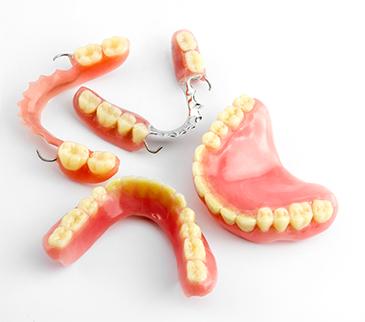
- Dentures – replace all teeth on the upper or lower arch with a removable prosthetic
- Partial dentures – replace one or more missing teeth by anchoring a prosthetic to your remaining natural teeth
A comprehensive dental exam will give us the information we need to make a recommendation to restore both your smile and your ability to eat and speak comfortably by replacing your missing teeth.
Contact Us to Schedule a Dental Appointment
Give us a call to schedule your next dental appointment. We look forward to welcoming you!